
What a CRM Is and Who Needs One
A CRM (customer relationship management) is a system that stores customers, deals, tasks and the history of communication. Instead of spreadsheets and messenger threads, a salesperson sees what stage each deal is at, what the customer was told and what to do next, and a manager sees the overall picture and reports.
You need a CRM when you have more than one salesperson, when leads arrive from several places (website, social media, phone) or when you lose customers because of forgotten promises. If you have five customers a month and everything is in the owner’s head, a spreadsheet is enough.
What any CRM consists of
- Customers and contacts with a history of communication.
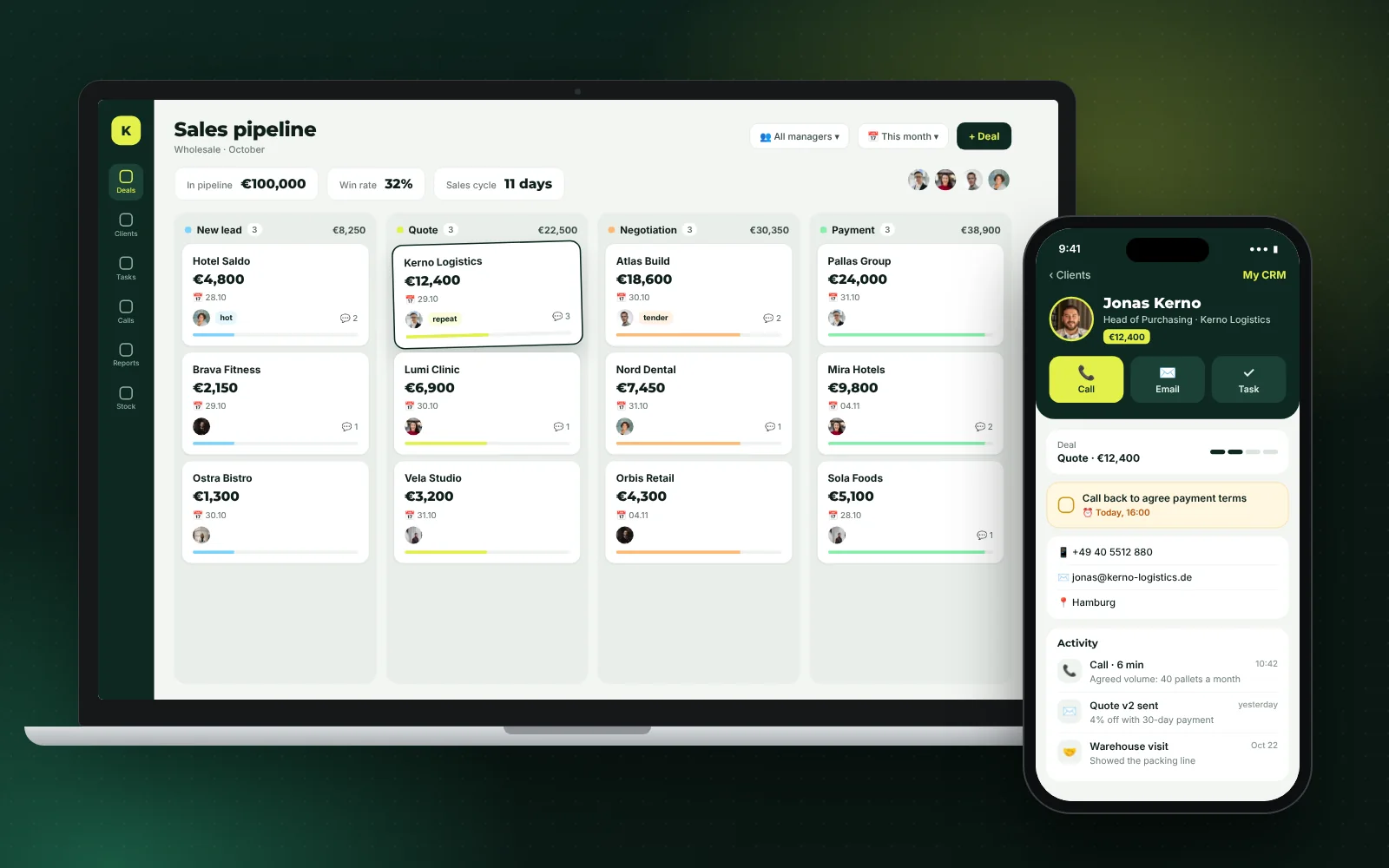
- A sales pipeline: stages from the first lead to payment.
- Tasks and reminders for salespeople.
- Roles and permissions: who sees and changes what.
- Reports: how many leads, how many sales, where deals get stuck.
- Connections: leads from the website, email, messengers, payment.
Now the main question: buy a subscription or commission development.
Off-the-Shelf CRM: Pros, Cons and What It Costs
Ready-made systems (Pipedrive, HubSpot, Salesforce, Bitrix24, amoCRM and others) launch in days and come with ready integrations and training materials. For a standard sale that is enough. You pay by subscription, and the prices are published on the vendors’ websites.
Benchmarks from public price lists
Prices change and depend on region, billing period and discounts, so below are ranges from reviews and vendor pages as of October 2026. Check the current price list before deciding.
- Pipedrive: plans priced per user per month. In 2025 the company moved to Lite, Growth, Premium and Ultimate plans; according to third-party price reviews for 2026, with annual billing that is roughly $14, $39, $49 and $79 per user per month. See the vendor’s page for current prices.
- HubSpot Sales Hub: the vendor’s page lists Starter from $20 per user per month (list price; promotional rates exist), and Professional at $90–100 per user per month plus a mandatory one-time onboarding fee of $1,500.
- Bitrix24: plans with a fixed price per team: on the vendor’s page Basic is $49 a month billed annually (up to 5 users) and Standard is $99 a month billed annually (up to 50 users). For larger teams this is very cost-effective.
Pros of an off-the-shelf CRM
- Launch in days rather than months.
- No developer is needed, and the vendor handles support.
- Many ready integrations and templates.
- You pay as the team grows.
Cons
- Your process adapts to the system, not the other way round. Non-standard stages and fields are done through workarounds.
- The price grows with the number of users and features: advanced capabilities are often in higher plans and paid apps.
- Customer data is stored with the vendor, which is a restriction for some industries and countries.
- The vendor changes the terms and prices, and you can only accept or leave.
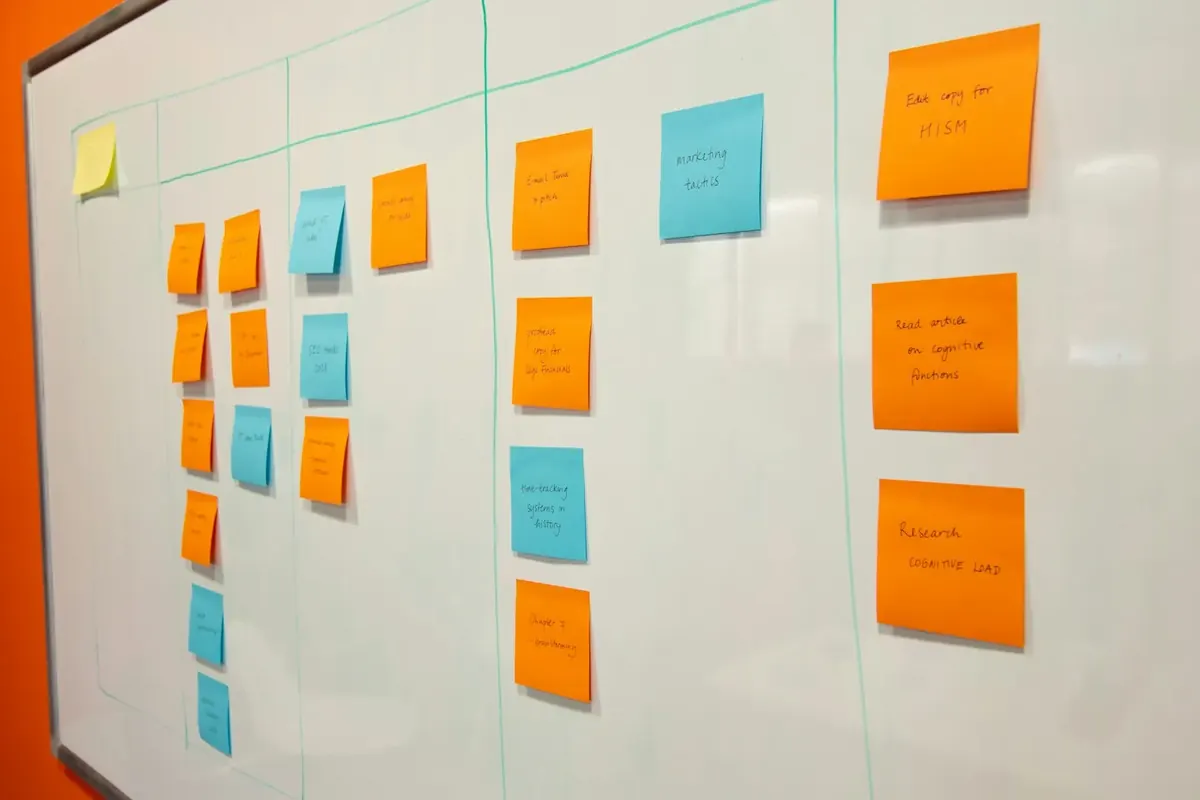
How Much Does Custom CRM Development Cost
You cannot price your own CRM “from a picture”: the price depends on the number of stages and roles, data migration, integrations and reports. That is why we build such systems only after an architecture session for €3,500 (2–3 weeks). In it we work out how a deal goes today, what data is needed at each step and what we connect to the website and email. The result is a product map, an estimate and a plan for the first version. The cost of the session counts toward the project, and the map stays with you in any case.
| What | Price per the YARDOS v0.4 price list |
|---|---|
| Architecture session | €3,500, counts toward the project |
| CRM built around your processes: pipelines, deals, tasks, roles, dashboards, data migration, training | from €29,900, from three months |
| Each integration (website, email, payment provider, spreadsheets, accounting) | + from €690 each |
| Automation of one chain on a ready-made CRM (lead, document, notification) | €1,490 |
| Employee evaluation (KPI) as a separate module | from €15,000 |
What the final price depends on
- How many stages and fields are in your pipeline and how non-standard they are.
- How many roles there are and what rights they have (salesperson, department head, director, branch).
- How much data has to be migrated and what state it is in.
- How many external systems have to be connected.
- Which reports and indicators the manager needs.
What you pay not to us
You pay for the domain and third-party services directly, with no markup. At the start the infrastructure can be free (hosting, database, email), but free plans have limits; when the CRM outgrows them, we will tell you in advance which plan you need and what it costs. The code, data and accounts are registered to you. To compare studio offers, the article how to choose a web agency helps: the same questions apply when ordering a CRM.
Custom CRM vs Salesforce and Other Off-the-Shelf Systems: Side by Side
| Criterion | Off-the-shelf CRM | Custom CRM |
|---|---|---|
| Launch | Days | From three months after the session |
| Upfront cost | Low: setup and training | High: from €29,900 |
| Monthly payments | Per user or per package, growing with the team | Support and infrastructure, independent of headcount |
| Non-standard process | Through workarounds and apps | Built for you |
| Roles and permissions | The set provided by the plan | Any, matching your structure |
| Customer data | With the vendor | With you |
| Risk of changed terms | The vendor changes prices and features | You decide |
| Development | What the product offers | What you order |
In short, what to choose
If your process matches what an off-the-shelf system offers and the team is no larger than 10–15 people, the off-the-shelf one wins. If you need special stages, roles and reports and have many salespeople, or the data cannot go into someone else’s cloud, start counting your own. We discussed the same question, “a subscription system or your own”, for websites in website builder or custom development.
The Cost of Ownership Over Three Years
You should compare not the price of the first month but the total over several years. For an off-the-shelf CRM that is setup plus subscriptions: users multiplied by the price, with paid apps and integrations on top. For your own, it is development plus support and infrastructure.
The calculator below counts both trajectories year by year and shows in which year your own system pays off, if it does at all. The defaults are a hypothetical example for a sales department of 20 people: a subscription of about €30 per user (roughly the middle of the public price ranges of Pipedrive and HubSpot in the lower and middle plans), €100 a month for apps and integrations, €1,490 to set up the ready-made system, €29,900 for custom development and €250 a month for support and infrastructure. The last figure is our assumption for the calculation, not a price list: we give the exact support cost in the estimate.
How to read the result
- With 20 users on a per-seat plan, under these assumptions your own CRM does not pay off within three years; it reaches parity in about five years.
- With 50 users on the same plan the picture is different: the subscription is about €1,600 a month, and parity comes in about two years.
- If you use a plan with a fixed price per team (for example Bitrix24 Standard, $99 a month for up to 50 users), put the amount from that plan in the “subscription” field: the off-the-shelf CRM stays very cheap, and you will not save on subscriptions with your own system.
The conclusion: money is rarely the main argument for your own CRM. The main argument is the process, roles, data and independence from a vendor’s terms. If you do not have these, count the off-the-shelf one.
Custom CRM vs off-the-shelf: cost of ownership
An example for a sales department of 20 people. A €600 subscription = 20 users at €30 (the middle of the public Pipedrive and HubSpot plans, see the sources; Bitrix24 has fixed-price team plans). Development follows the YARDOS v0.4 price list (custom CRM from €29,900, the €3,500 architecture session is credited). We take €250 a month for support as an assumption: we give the exact sum in the estimate. Vendors’ prices change.
When You Should Not Build Your Own CRM, and When You Should
You should not if
- You are starting out and the sales process has not settled yet. Work in an off-the-shelf system first and understand what exactly is missing.
- You have up to 10 salespeople and a standard pipeline of “lead, call, proposal, payment”.
- You only need to record leads from the website: an off-the-shelf CRM and a configured connection are enough.
- There is nobody who will make product decisions and write the requirements.
You should if
- A deal in your country has stages that ready-made systems lack: approvals, sign-offs, calculations, documents, scheduled payments.
- You need complex roles: branches, departments, partners, customers who see their own account.
- Data cannot go into someone else’s cloud or needs special storage rules (for example, for processing personal data under the GDPR and UK GDPR; in the US, state privacy laws differ, so confirm with a lawyer).
- You have many salespeople, and a per-seat subscription has become a noticeable expense.
- The CRM is part of your product, for example a school platform or a financial service. We built such systems in the Discovery School and duck.credit projects, described in the case studies.
If your “CRM” is to become a product sold to other companies, it is no longer an internal tool but SaaS; read about that path in how to build a SaaS product. An internal version of the system can be launched as a minimum viable product: what an MVP is and how much it costs.
The Third Way: an Off-the-Shelf CRM, Setup and Integrations
Between a subscription “as is” and your own development there is a middle ground: take an off-the-shelf CRM and configure it for yourself. Often that is enough.
- Automation of one chain (a lead from the website becomes a deal, the salesperson gets a task, the customer gets an email): €1,490.
- Integrations of the website, email, messengers, payment provider and spreadsheets: from €690 each.
- A chatbot or AI assistant that collects contacts and passes them to the CRM: see prices in how much a chatbot costs.
If you already work in Pipedrive, HubSpot, amoCRM or Bitrix24 and are missing a couple of features, check this path first. If we see that configuration is enough, we say so honestly: we do not sell development where it is not needed.
How to prepare for a conversation with a studio
Describe your process: the stages of a deal, who is responsible for what, what data is needed at each step and which systems have to be connected. The clearer the specification, the more accurate the estimate; the article how to write a website specification and brief offers a template that also suits a tracking system.
What to Choose in Your Situation
- You are at the very beginning. An off-the-shelf CRM (a free or basic plan). Consider your own system after a year of work, when you understand what is missing.
- The team is up to 10 people and the process is standard. An off-the-shelf CRM plus setup and a connection to the website.
- 20–50 people and a non-standard pipeline. Count both options in the calculator and discuss an architecture session (€3,500, credited to the project).
- You need special roles, branches or manager reports. A custom CRM: from €29,900.
- Customer data cannot be stored with a third-party vendor. A custom CRM or installation in your own environment, discussed at the session. Confirm the legal requirements with a lawyer in your country.
- You have an internal system you want to turn into a product. Describe it as a future SaaS at the architecture session.
- The budget is under €10,000. An off-the-shelf CRM and automation of one chain for €1,490.
Subscription terms and prices can differ from the standard rates, so check the vendor’s price list on the date of your decision.
Frequently asked questions
How much does it cost to build your own CRM?
With us, CRM development around your processes starts from €29,900 and takes from three months. First comes an architecture session for €3,500, which counts toward the project. You get an exact estimate after it.
How much does an off-the-shelf CRM cost?
It depends on the system and plan. Many charge per user: by public price lists that is from tens of dollars a month and up, plus paid apps. Bitrix24 has plans with a fixed price per team. See the vendors’ current price lists.
When is a custom CRM better than an off-the-shelf one?
When you have many employees, a non-standard process and special roles, when data cannot be stored with a third-party vendor, or when per-user subscriptions become a large expense. For small teams the off-the-shelf one more often wins.
Can I configure an off-the-shelf CRM instead of building one?
Yes, and often that is enough. Automation of one chain costs €1,490 with us, and integrations are from €690 each. If we see that configuration is enough, we say so right away.
How long does CRM development take?
From three months. We give the exact timeline in the plan after the architecture session: it depends on the number of stages, roles and integrations.
Who owns the code and data of a custom CRM?
You do. The code, domain, accounts and data are registered to you, and we work by invitation. You pay for the domain and third-party services directly.
Can data be migrated from my current CRM or spreadsheets?
Yes, migration of customers and history is part of development. The quality of the migration depends on the state of your data, so we discuss it at the architecture session.
What if we already work in Pipedrive, HubSpot or Bitrix24?
First check whether configuration and integrations are enough. If you have hit limits in process, roles or data, we will discuss your own system and migration. The calculator in this article helps compare costs over several years.
Sources
- HubSpot: Sales Hub pricing · HubSpot
- Pipedrive: pricing plans · Pipedrive
- Bitrix24: pricing · Bitrix24
- GDPR: Regulation (EU) 2016/679, official text · EUR-Lex (European Union)