
Seven steps from idea to launch
Making a website is easier than it looks if you go in order. Here is the plan we follow and the one you can use to check any contractor.
- Goal. One sentence: what you expect from the site. Get leads, show the company to a bank, sell online, attract customers from search. Everything else depends on it.
- Type of site. One-pager, business card site, landing page, business website, store. The choice is covered below in "What to choose in your situation".
- Materials. Logo, photos, list of services, prices, company details, contacts. This is the most common source of delays.
- Domain. The address of your site, for example your-company.com. Register it in your own name, not the contractor's.
- Who builds it. A studio, a freelancer or a do-it-yourself build. How to avoid mistakes is covered in "How to Choose a Web Development Company".
- Testing. Phone, speed, forms, emails, legal pages.
- Launch and first customers. Domain, email, analytics, Search Console (a free Google service that shows how your site appears in search), handover of access.
If you want to see which step your project is on, use the checklist below: it shows whether you are ready to launch.
Are you ready to launch a website
- I can say in one sentence why I need a website
- I have chosen the type of site: page, business card, business website or store
- I have the company name and details
- I have a logo and brand colors
- I have photos and a list of services with prices or a price range
- I have a 5–10 sentence text about the company
- The domain is chosen or registered in my name
- There is a person who makes decisions and replies within 1–2 days
- I know what to do with leads: where they arrive and who replies
- I know which legal pages are needed in my country
How long does it take to build a website
The timeline depends not on "code complexity" but on how fast you provide materials and approvals. Our timelines, assuming the brief and materials are ready:
| Type | Timeline | Price |
|---|---|---|
| Website in 24 hours (1 page) | 24 hours | €599 |
| Landing page | 2–5 days | €790 |
| Business card website | 3–5 days | €990 |
| Business website | 10–14 days | €2,490 |
| Corporate website | 2–3 weeks | €3,490 |
On a website builder you can put a site together in an evening if the texts, photos and legal pages are already done, and you still have to prepare them yourself. We do not build on website builders, but we do not think they are bad: for a personal project it is a fine option (see the comparison in "Website Builder vs Custom Website").
What stretches the timeline
- No logo, photos or texts.
- Several people make decisions and disagree with each other.
- The domain is not registered, or someone else holds the access.
- You want "one more page" in the middle of the work. It is better to collect a list after launch and add pages as modules.
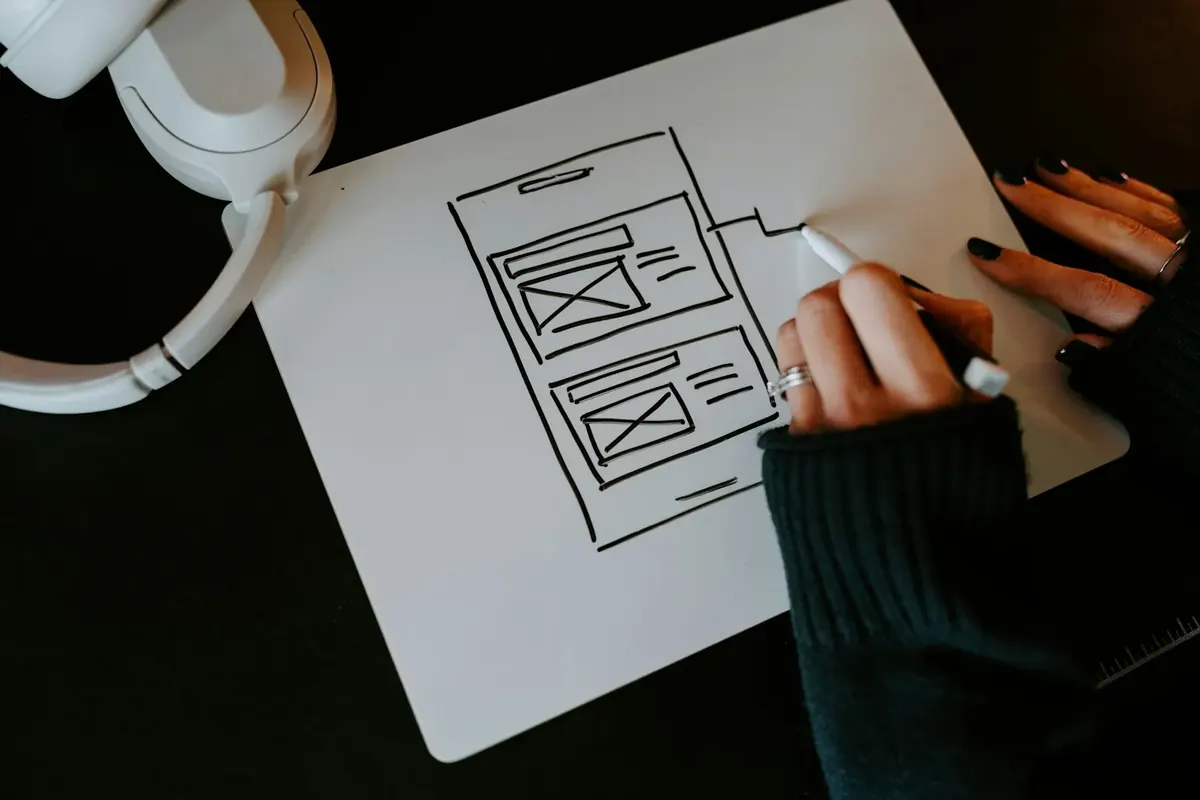
Building a website for your business: working with a studio
You can order a website in your country from a studio, a freelancer or a team abroad. For a business a studio or team is more convenient: if one person gets sick, the project does not stop. But choose by four questions, not by advertising.
- Show me what you have built. Real projects with links and a description of the task. Ours are collected on the case studies page.
- What is in the price? Design, copy, legal pages, form, email, analytics. Ask for a list, item by item.
- Who owns the site? The domain, code and accounts must be registered to you.
- What happens after launch? Who edits the texts, who is responsible for failures and how much it costs.
To keep the conversation concrete, prepare a short brief. A sample and a template are in "Website Requirements and Brief". What it all costs is in "How Much Does a Website Cost in 2026".
Our process is simple: you fill in a brief, we show the structure and design, build, test and launch. The whole process is described on the How we work page.
Website in 24 hours: what happens in a day
The "Website in 24 hours" is our entry product at €599. It is for when a bank, payment provider, registrar or partner needs to quickly see a working company website. It is one page of up to 7 blocks with a description of your activity, contacts, a contact form, legal pages for your country and email on your domain.
An important condition: the 24 hours start from the moment we have the brief, materials and access to the domain. Until then the clock does not run. Here is what happens in that day:
- Brief and materials. We receive the brief, materials and domain access, and clear up any questions.
- Structure. We decide which blocks are needed and in what order.
- Design and layout. The page opens on phones and computers.
- Content. Texts, photos, legal pages, the contact form and email.
- Testing. Speed, mobile version, a test request and a test email.
- Launch. The site on your domain, handover of access and a short guide.
You see a preview at every stage and can adjust blocks before launch.
We do not promise that a bank or payment provider will approve your company: that is their decision. Our job is for the site to look like a real business and contain what is usually asked for in a check. The requirements for such a site are covered in "What Website a Bank and Stripe Need". The product is described on the Website in 24 hours page.
You pay for the domain (about €10–15 a year) yourself, and hosting is free at the start. The price of this product is fixed.
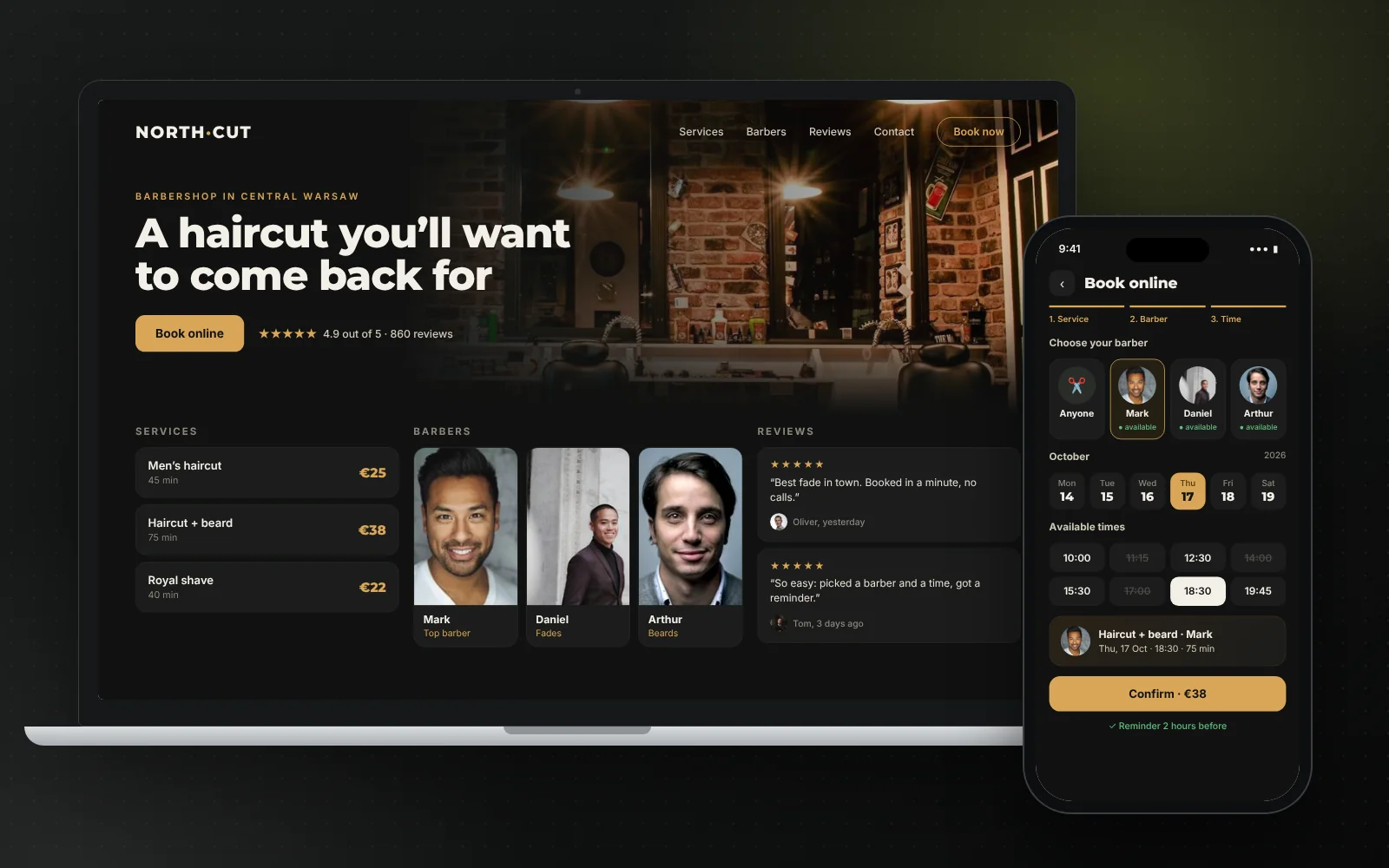
What to prepare before the start
The more complete your materials, the faster and cheaper the site will be. Here is the minimum set:
- Company name and details: legal form, address, registration number and, if applicable, VAT number. For sites serving the EU, some of these details must be shown on the site by law; ask your lawyer which ones.
- Description of your business in plain words: what you do, for whom, how people buy.
- Contacts: email, phone, address or city, messengers.
- Logo and brand colors. If you do not have them, that is a separate service; we offer a logo and brand identity.
- Photos and video: real ones are better than stock.
- List of services and prices, or "from what price".
- Work examples and reviews, real ones only. Made-up reviews hurt trust and break platform rules.
- Access to the domain, or a decision on where to register it.
If something is missing, that is fine: we will suggest how to collect it and show what can wait.
What to check before launch
A site is "ready" when it works for the visitor, not for the developer. Before launch, go through this list:
- Phone. Open the site on a smartphone: the text reads without zooming and the buttons are easy to tap.
- Speed. Google treats a page as good if its main content loads in 2.5 seconds or less (the LCP metric). You can check it for free in PageSpeed Insights.
- Form. Send a test request: the email should reach you and a confirmation should go to the customer.
- Legal pages: privacy policy, terms, company details and, for the EU and UK, a cookie banner.
- Email on the domain works and messages do not land in spam.
- Analytics and Search Console are connected.
- Access is handed over to you and two-factor protection is on.
You can check some of this yourself, and the contractor should check the rest; it is fine to ask for a report. For us this is a mandatory stage, not an option.
What to do after launch
A published site does not bring customers by itself. In the first 30 days do three things: send the address to people who already know you, add it to your social and map profiles, and register the site in Search Console so Google finds it faster. No honest studio guarantees a search result: rankings depend on competitors and on the search engine's decisions, not on the contractor. Search traffic grows over months, and that is normal; how to estimate it is shown in "How Much Does SEO Cost".
If you need quick leads, run ads to a landing page. If you need a steady flow from search, you need a site with a blog and pages for each service, that is, a business website.
Make it a habit to look at three numbers once a month: how many people came to the site, how many left a request and where they came from. That is enough to see what works and what does not. Update texts and photos as your business changes: outdated prices and phone numbers hurt trust more than a modest design. If you would rather not do this yourself, support and updates are sold as a separate monthly package.
Five common mistakes when making a website
Almost all website problems repeat from project to project. It is useful to know them in advance, even if you will not build the site yourself.
- A site about "us", not about the customer. A visitor wants to understand in five seconds what you offer, what it costs and how to reach you. The company history is secondary; its place is the About page.
- Too many pages at once. A thirty-page site with empty sections looks worse than a tidy five-page one. Start with the main things and add the rest as needed.
- Texts "later". A design without real texts is only a mockup. When the real texts do not fit the blocks, the design has to be redone and the timeline doubles.
- No clear action. Every page needs one main button: "Request a quote", "Call", "Book". Five equal buttons work worse than one.
- Forgetting the phone. For many businesses a large share of visitors come from smartphones. Check every screen on a phone, not only on the developer's monitor.
If you want to assess your project against these points in advance, use the checklist at the top of the article or write to us: we will honestly tell you what is missing and what you can launch now and what to postpone to a second stage. That is how you can keep growing: first a simple site in a few days, then a blog, payments and an account as separate modules.
What to choose in your situation
- If you need a site urgently for a bank, Stripe or a registrar, take the Website in 24 hours at €599 and prepare your company details and domain access in advance.
- If you are just starting and the budget is small, begin with a business card site at €990 or a landing page at €790: they can be grown with modules, so you will not rebuild from scratch.
- If you count on customers from Google, take a business website at €2,490: pages for services, a blog, SEO setup.
- If you sell a local service in your city, one page with a map, contacts and reviews is enough to begin with.
- If you are not sure what you need, write to us on the contact page: we will say honestly if the simplest option is enough.
Frequently asked questions
How long does it take to make a website?
A one-pager is ready in 24 hours, a landing page or business card site in 2–5 days, a business website in 10–14 days, and a corporate site in 2–3 weeks. The clock starts when we have the brief, materials and domain access.
Can I build a website myself?
Yes, on a website builder a simple site can be put together over a weekend. But you still have to prepare the texts, photos, legal pages and search setup. If your time is worth more than the development fee, it is better to order it.
What do I need to launch a site in 24 hours?
A completed brief, a logo and photos (or a decision to go without them), company details and access to the domain. Until these are in, the 24 hours do not start.
Do I need to register the domain myself?
Yes, it is better to register the domain in your own name. We will suggest a registrar and connect the domain through an invitation. It costs about €10–15 a year, paid directly to the registrar.
Do I need legal pages?
For sites working with customers in the EU or UK you usually need a privacy policy, terms and company details, and for Germany and Austria an Imprint as well. We provide templates for your country, and your lawyer does the final check.
How much does a business website cost?
From €599 for one page to €2,490 for a 10-page site with a blog and two languages. A detailed price breakdown is in our article on website cost.
Will my site appear in Google right away?
No. The site has to be added to Search Console, and Google's crawler does not visit it immediately. Nobody can guarantee search rankings; they depend on competition and on the content of the site.
Sources
- Core Web Vitals: how the metric thresholds were defined (LCP, INP, CLS) · web.dev (Google)
- Creating helpful, reliable, people-first content · Google Search Central
- E-commerce: standard EU rules (summary of Directive 2000/31/EC) · EUR-Lex
- How much does a website cost? (Shopify) · Shopify